
Episode 123: Testify: When Queer Ohioans Confronted the Man Trying to Erase Them with Ken Schneck
Our guest is Ken Schneck, the founder and editor of the Buckeye Flame, a statewide LGBTQ+ news site in Ohio. We discuss how the publication began in 2020 and why he felt there needed to be a dedicated source covering LGBTQ+ issues across Ohio.
The mission of the Buckeye Flame is to amplify LGBTQ+ Ohioans and support civic engagement. It encourages readers to submit local stories, including from rural parts of the state, and how that approach has expanded the range of reporting they receive. They also want people to freely share the articles with others.
The main reason we produced this episode was to talk about the recent coverage of House Bill 249, the proposed drag ban in Ohio. We discuss testimony from LGBTQ+ people who appeared before the Ohio House Judiciary Committee, including the tense exchange between Representative Josh Williams and witnesses who spoke against the bill. We focus on how the hearing affected people testifying from their lived experience and professional expertise.
House Bill 249 not only connects to drag performances but also to transgender people being in public spaces. We discuss concerns raised in the hearing about vague legal language, enforcement, and the possibility of chilling speech and discouraging public expression.
We also talk about the history and future of LGBTQ+ media in Ohio and the publication’s efforts to expand coverage of LGBTQ+ Ohioans of color.
01:00 Origins of The Buckeye Flame and mission
05:54 When Queer Ohioans Confronted the Man Trying to Erase Them
10:19 Two Clips from the HB 249 hearing on 03/18/2026
29:10 Main Interview resumes





Our Guest
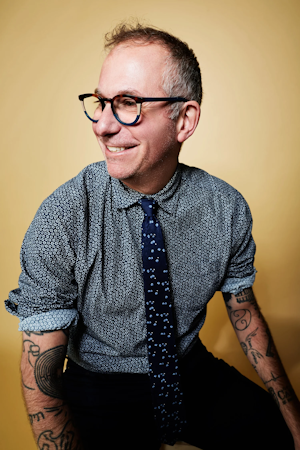
Dr. Ken Schneck (he/him) is the editor of The Buckeye Flame, Ohio’s LGBTQ+ newsroom. For this work, he was honored with the Sarah Pettit Memorial Award for National LGBTQ+ Journalist of the Year. He is the author of “Seriously, What Am I Doing Here? The Adventures of a Wondering and Wandering Gay Jew” and three LGBTQ+ Ohio history books. Schneck spent 25 years working in higher education, including 10 years as a dean of students and 13 years as a tenured professor of education. He is a graduate of the Executive Program in News Innovation and Leadership at the Craig Newmark Graduate School of Journalism at the City University of New York.
Extras:
Not Just Queens: How HB 249 and Similar Bills Ban More Than Drag
Ohio House passes bill expanding public indecency laws; critics say it targets drag performers
Ohio House Judiciary Committee 03/18/2026 HB 249 (full hearing video)
Transcript:
Read full transcript here
[0:02] This is Glass City Humanist, a show about humanism, humanist values, by a humanist. Here is your host, Douglas Berger. Our guest is Ken Schneck, the editor of Buckeye Flame, which amplifies the voices of LGBTQ plus Ohioans. We talk about the origins and mission of the Buckeye Flame in a recent article that he wrote about members of the community testifying in person in opposition to the proposed drag ban in Ohio known as House Bill 249. And they’re run in with the Christian nationalist sponsor of the bill during the hearing. Glass City Humanist is an outreach project of the secular humanists of Western Lake Erie, building community through compassion and reason for a better tomorrow.
[1:00] All right. Our guest today is Ken Schreck. He is the founder and editor and all around Gadfly for the Buckeye Flame. It’s a news website for the LGBT community here in Ohio. And it’s very good to speak to you today, Ken. Thanks so much for having me. I am putting all around Gadfly on my LinkedIn now. I’ll take it. There you go. There you go. Because you do, you’re very active in the community and you’re very active in the news part of it. Um, I really enjoy reading the Buckeye flame and you guys, you guys do a real good job over there. And I really appreciate it. We appreciate you. Teamwork.
[1:43] When did you start the Buckeye Flame? Sure. We started the Buckeye Flame in 2020. There was another statewide LGBTQ plus publication that went under during the pandemic, which left the Buckeye State here without any type of LGBTQ plus statewide publication. And here in a state where LGBTQ plus Ohioans do not have legal protections in the areas of housing or employment or public accommodations and where our state legislature is introducing back in 2020 and continues to today, bill after bill to restrict the lived experience of LGBTQ plus Ohioans. It was just unacceptable that there not be a statewide publication. So as soon as that other publication went under, a bunch of us stepped into the breach and launched the Buckeye flame pretty darn quickly. Yeah, I think it was at the previous publication. That was a magazine, wasn’t it? It was. Yeah, I had filled in. It was Prism Magazine. It was a publication from Equitas Health. And so it did wonderful things, but it was also, by the time we had finished, it was a bi-monthly magazine. So you couldn’t really even do topical news except some pieces on the website. So the Buckeye Flame presented a much different opportunity to be its own nonprofit and to be able to have rolling content every single day.
[3:12] And what is the mission of Buckeye Flame? What exactly are you aiming to accomplish? Yeah, the shorthand of it is to amplify LGBTQ plus Ohioans. That’s really what we are here to do. It’s very interesting that the word journalism doesn’t actually appear in the mission statement of the Buckeye Flame, but that’s how we do it. That’s our methodology for amplifying LGBTQ plus Ohioans to talk about their wonderful experiences. And we do try to focus on queer joy, but also the challenges that they’re encountering statewide. Right there in the mission statement two is also empowering civic engagement. We really take seriously our role in activating readers. We hope that our content activates readers. And then what we really try to do is at the end of every single piece, give them a couple bullets of, hey, you want to find out more? Go here. You want to go register to vote? Here’s how you do that. You want to contact your representative? Please, for the love of God, contact your representative and here’s how you do that. Uh, so we’re a huge fan of empowering civic engagement and it is indeed embedded in our mission statement. And we already talked about there being a previous publication, but it also, you know, needs to be said that Ohio has a strong LGBTQ community, both in Cleveland and Columbus in here in Toledo and around the state, um, um, um, um, um, um, um, um, um, um, um, um.
[4:35] What does that do for you for the Buckeye Flame? Do you get a lot of news that normally you might not have realized that you had?
[4:44] Very much so. On the first day that we launched back in June of 2020, there have been a couple constants on our website that still stay there from that very first day. And one of them is a link that says, submit a story. If you know something going on in your neck of the woods, odds are we’re not there. Our brick and mortar newsroom is in Cleveland. And thankfully, the internet allows us to be everywhere. And just as we’re doing right now, we’re not in the same place, but we can still have an informed and quality conversation. So thank you to all the technology that advanced during the pandemic, for which we are grateful.
[5:19] So we have always had that submit a story link so that people could say, hey, you might not know it, but this is happening over here. We particularly love when it is a rural story, because there might not be media in that area of Ohio covering that story. So, yeah, we we love that. Like at the very start, when we launched the Buckeye claim, we were getting maybe one submit a story submission every, gosh, eight, nine days tops.
[5:49] And now we get probably three to four a day. And that was one of the reasons why I wanted to talk to you today was, in particular, a story that you wrote and published recently about the drag ban, the proposed drag ban that’s working its way through the Ohio legislature. It’s House Bill 249. And you had written the article and it wasn’t so much the nuts and bolts of it. You were actually writing about the reaction to people who took the time to testify in person in the committee room in Columbus.
[6:29] Yeah. And how exactly did that turn out for? I thank you so much for that, because I worked really hard on that piece. And, you know, I as the editor and and effectively as the executive director of a nonprofit who is always focused on their sustainability, I don’t get to write stories every single day like I used to. And so I often when I write stories, it’s maybe about a new piece of legislation and it’s something that I can knock off on a day. And that particular piece about people who were coming to testify for the first time. And I was really particular, I wanted to find folks who had never done this before, who were going to Columbus or already lived in Columbus, and were taking time out of their lives to testify for the first time, from their own lived experience, from their own professional expertise.
[7:19] And so I’m so happy that people are talking about that piece and that it got such wide coverage. The advocate reprinted it in its entirety, which was wonderful, because it got so many more eyes on the experience of people who are stepping into what is part of our right here in Ohio, and that’s to testify on these bills that are affecting our experience. You know, unfortunately for this one, certainly there was a proponent hearing where there were some Ohioans did come forward to testify in support of HB 249. I was covering, because we do center LGBTQ plus voices, I was covering three individuals who were testifying against the bill, and they had a horrible experience. They had a great experience in speaking from their expertise and speaking from their authenticity. But on the committee, the Judiciary Committee.
[8:12] In front of which they testified was also one of the bill’s sponsors uh well known i’m sure to your listeners uh because up until recently uh well he still will be a state representative until the end of the year uh but did not win his primary um for the republican nomination for the uh united states house of representatives and that’s that’s representative josh williams um he was very clear in his intentions of just kind of nailing folks, right? Like he was there, he was very open in saying it, I’m going to ask every single one of these constitutional questions and legal and questions and policy-based questions.
[8:54] And if you come in and say, like, this bill is going to limit my voice in some way, he said, I’m going to come back at you and say, show me in the bill where it does that in a way that was not done with the proponents of the bill, not at all. So really important piece for me to write, because I write so many pieces about different pieces of legislation and bills where I’ll quote people who testify. But I wanted to talk afterwards to three folks who did testify about what that experience was like to sit there in a packed room and be grilled. And that included everyone from an attorney who, Representative Williams, said, you’re just 90% wrong. And she said, no, I’m not 90% wrong on the Constitution and what I’m telling you. And what is it like to be a legal mind and have a colleague just flat out dismiss everything you’re saying and say in front of their colleagues, you are wrong. And it’s just kind of shocking for folks. So yeah, thank you again for shouting out that piece. I hope that it captures just some of the vibe of what any Ohioan can do,
[10:13] which is go testify, but hopefully not what every Ohioan will experience when they do. Okay, everybody, I wanted to, this is Doug, the host, obviously.
[10:22] Just wanted to dump out of this interview with Ken Sheck for a moment, because as long as I’ve been doing this podcast now, I still have yet to figure out how to play a video or audio clip for a guest to get their reaction to it while we’re speaking. And so Ken was very graciously enough, you know, I told him what clips I had planned to show or feature, and he reacted to it, you know, in general terms. So what I wanted to do at this point is to play the clip. I have two clips. They’re kind of long, about five or ten minutes long each. The first one is the person that’s giving the testimony. This was to the Ohio House Judiciary Committee on March 18th. And the first clip I have is Andrew Levitt. He’s better known as drag superstar Nina West. And he’s appearing to give his testimony out of drag. And he says in his speech at the beginning that he thinks drag is celebratory. And what he had to do today that day was somber. So he did not dress in his Nina West persona.
[11:41] And and basically what you’re going to get is William, Representative Josh Williams, debating Andrew for no apparent reason. Representatives are allowed to ask questions, but you’re not supposed to be debating the person. You’re not supposed to be proving them wrong.
[12:03] It’s just to get information back and forth. And that’s one of the things that Representative Williams does wrong. And I believe he’s acting this way more than likely to create campaign clips, because at the time that this testimony was happening, he was running for the Republican nomination for the 9th District. So I really do think that it was more about him having a performance. Now, he’s done this, as I noted in the regular interview with Ken, that this is like a pattern for him. He has done this before, but the way that he did it in this particular hearing was above and beyond what he usually does. And I think Andrew Levitt does a very good job of trying to contain Representative Williams. Then the second clip that I’m going to play is his questioning of of Kim Burroughs, who is a former prosecutor and public defender. And so they kind of go at it lawyer to lawyer. And again, he Representative Williams is like trying to win a debate.
[13:14] And he’s the one that sponsored and wrote this bill. The one thing I want you to want to point out that I want you to listen to for during Burroughs testimony is she comes down to the nitty gritty about why House Bill 249 was kind of not the proper way in that it would chill speech because what it what this is what it would do. And this is the feature of it, I believe, for someone like Representative Williams, is it would give law enforcement the ability to harass and detain anyone that’s perceived performing obscenely in drag or as a gender that they were not born as. So you could have a transgender person, let’s say, at a restaurant, and somebody, some bigoted Christian nationalist doesn’t like it or thinks that it’s ridiculous, so they call the law.
[14:23] And so the cop shows up, he kind of sympathizes with the bigot, and so he removes the person. Maybe the person gets obstinate with him, and the cop ends up arresting them and charging him with obscenity or a violation of this law. And even if the outcome of it doesn’t happen, nothing happens to the person, like they don’t go to prison or anything like that, they have actually ruined, you know, the cop has actually affected that person’s life.
[15:00] And so they are less likely to feel comfortable being in public. And that’s the whole point. There’s another part that I don’t play, another part of the clip that I don’t play, where Representative Williams actually mentions the loud part out loud. He says, well, we’ve had these kind of performances in the park. Well, they’re not obscene performances. See, this is the thing with him, is that he believes that it’s inherently, he says it’s not inherently obscene, but why would you be targeting this specific thing? And they’re also targeting transgender people because of an incident that happened in a locker room in Xenia that they also talk about in this clip. So I wanted to play these two clips to give you an example of what happened during that testimony. And then we’ll take a brief pause and then get back into the regular interview.
[16:00] What exact portion of the bill do you believe will prevent you from doing regular drag performances in front of adults? Well, through the chair to the representative. I believe that the language is so vague that it does not allow an opportunity to clearly define what an adult cabaret space is versus what a performance space may be. Follow up?
[16:23] So I actually have a bill here in front of me, and it’s very specific on what an adult cabaret is. And that it’s a performance that is obscene or harmful to juveniles, which is found in 2907.01, the definition. It’s clearly defined. It’s been defined for a very long time, not only in Ohio, but in the United States. And it says if you engage in obscene conduct in your performance, that you can’t do it in the presence of a minor. It doesn’t say you can’t even do it in the presence of adults. There’s even an exception you can do it in a private residence or anywhere where children are not present. So that means the only thing that is prohibiting is obscene performances in the presence of minors. And the definition of obscene performances, it says things like depicting sexual activity, masturbation, sexual excitement, nudity in a way that represents human beings as mere objects of sexual appetite. Why do you think drag performers should be able to engage in simulated masturbation, simulated sexual activity in the presence of a minor? Because that’s the only thing that the bill bans. Through the chair to the representative, there are a lot of things in that statement. And I can reply to one of those being that there are already laws on the books here in the state of Ohio that deal with such obscene performances and behavior. And I don’t see how this bill reinforces or does anything to further that.
[17:53] Thank you, Chair. Actually, there isn’t. In the state of Ohio right now, there are gaps in our laws. A strip club cannot allow a minor to be present during a strip performance, but the stripper can go into the parking lot and perform in the presence of a minor in the state of Ohio, and it’s lawful. Under our current laws, under our current laws right now, that is absolutely permitted. And we’ve seen performances at public parks that cross the line. So I’ll repeat the simple question. Why do you think you should be able to perform an obscene, and the bill does not say drag queen performances are inherently obscene. I know other states have taken that approach. This bill does not do that. So no different than if Beyonce came to Ohio and engaged in obscene conduct during her performance, any performer in the state of Ohio, explain to me why you think it is okay for an adult to engage in an obscene performance in the presence of a minor? Well, if it’s obscene or harmful to juveniles, then it would, again, under Ohio law, be considered already illegal. Otherwise, what is decided to be appropriate for children should be determined by their parents, and I don’t believe that should be determined by politicians.
[19:05] So, again, and then it goes on the definition of based of what is obscene. Me standing in full drag to you could be seen as obscene. And I disagree with that notion. But thank you for the opportunity to reply. One attorney to another, when we say something is unconstitutional, I take that one a little bit serious. So I’ll come back to that, especially since I taught constitutional law for five years. And I know the bill is constitutional.
[19:30] Earlier in your testimony, you talked about how there was going to be a large number of resources that were going to be needed. We were going to burn through funds. We were going to crowd Ohio jails. Well, that would only be the case if we had a very large number of adults that were trying to engage in obscene performances in the presence of a minor. Because that’s the only criminal conduct that’s here. And no, obscenity is not vague. The definition has been used for decades and upheld by the Ohio Supreme Court and the United States Supreme Court. Right now we have, since you’re a former prosecutor, we have statutes like pandering obscenity to a minor, where you can’t provide obscene conduct. So I can’t tape an obscene performance and then show the recording to a minor. And all I’m saying is it’s also unlawful for the minor to be present during a performance. So we already have a statute that says I can’t show the minor a recording of that obscene performance. This statue simply says you can’t perform that obscene performance with a minor being present. Tell me how that is different or vague or somehow different from a statute that’s already on the books and has been enforced and has been prosecuted for decades in the state of Ohio.
[20:44] Thank you for the question. It raises the distinction between facial and as-applied challenges, as you know, sir. This statute, the definition of obscenity is found in 290701F, and I’d like to draw the representative’s attention to subsection 5, which defines obscenity as a series of displays or description, including nudity. This definition is broad, and yes, it has survived facial challenges, but should this bill be used to prosecute a drag queen, a drag performer, or even a transgender person who is mistaken for a drag performer, there is lots of breathing room in the plain language of this statute for a law enforcement official or a prosecutor who wants to make a case out of that. And that is the point of the vagueness doctrine. It’s not about the final question at the end of the day, will this statute survive strict scrutiny, which it will not. But this statute, because of its vagueness gives untold power for any attorney or police officer who perceives it in a certain way to exercise the full panoply of powers available to the government to arrest, to put somebody on pretrial supervision, to ruin a life for a conviction that ultimately will be overturned by the courts. Thank you, Chair. There was a lot that was said there, and about 90% of it was wrong.
[22:11] So the vagueness determination is not about the application, because the application is different. The vagueness statute is actually under the due process requirement. That’s where the Supreme Court has said it. So you articulated that entirely wrong. So the vagueness statute is about whether or not it puts the offender on notice of what conduct is criminal. And if it’s too vague, since you were not put on notice that your conduct was criminal, it’s unconstitutional because it’s a due process violation. That’s what the vagueness doctrine actually underlines. It’s not about the application. Now, the application of a statute, every statute that’s written on the books can be misapplied by an officer. That’s what a motion suppress is for, and a motion to dismiss, and the jury verdict is for. Every statute known to man can be misappropriated by a law enforcement officer. We saw that time and time again during Jim Crow. You’re not going to you’re not going to win the argument by saying this has the opportunity to be misapplied because every statute has that. But you called it unconstitutionally vague. And I’m trying to ask how because you went back to the original statute of obscenity, 2907.01.
[23:18] It’s the same statute that makes it obscene to provide a recording of obscenity to a minor. It’s been upheld as constitutional time and time again. and now we’re saying that you can’t engage in that performance that’s being recorded in the presence of a minor child. Tell me how that is different because you initially started off by saying it’s unconstitutional, but your argument has been completely wrong. So tell me how that somehow is different than right now a parent cannot provide a recording of the performance. So I’ll give you an example.
[23:53] Let’s say you went to a bar where there was a drag performer. Only adults were present. And the performer engaged in obscene conduct. Full nudity, simulated masturbation, simulated sex acts. Let’s say that occurred. Let’s say… Ladies and gentlemen, you know, if you must ask in a civil and respectful manner, if not, you’re going to be asked to leave. So please allow him to ask the question. Thank you. Let’s say that occurred in the state of Ohio and one of the attendees recorded it and went home and showed it to a minor child. That’s unlawful under pandering obscenity to a juvenile in the state of Ohio. Why is it something different if the juvenile was actually present and we say the performer shouldn’t do that in the presence of a child? Tell me the distinction between the two. Thank you for the question, Representative.
[24:53] There was a lot in the question. I’d like to hit three different points. First, you are absolutely right. It is routine in the courts to challenge prosecutions with motions to dismiss and motions to suppress. The argument today is this bill will open the floodgates to those procedures, bog down the courts, and be very expensive for Ohio’s cities, municipalities, counties. Second, as the representative may know, in the First Amendment context, vagueness challenges have a special place in that body of law. Because there is a overbreadth doctrine in the First Amendment, vagueness is especially concerning because if a bill is not very clear, it will chill speech, meaning even protected speech that is not illegal, people will not engage in it out of fear of prosecution. For the representative’s last question, the last point in the question.
[25:56] To be to be frank, I believe the question is targeting a specific set of facts that A, is already unlawful under Ohio law. So the question should be, what does this bill add? If you can already prosecute that offense that you describe under pandering obscenity, and you can already prosecute obscenity presented to juveniles under the disseminating matters harmful to a juvenile statute. What does this add? It adds nothing but statutory language enabling the prosecution and persecution of transgender Ohioans and LGBTQ drag performers engaging in expressive protective conduct. That is why this committee should reject this bill. All of these, this parade of horribles, Ohioans are already protected under the other sex crimes in Ohio law. This doesn’t add anything other than a vehicle for persecution. One more follow-up. Thank you, Chair.
[27:01] Again, earlier, the example that I gave you, the recording that the recording of that performance shown to a child would be unlawful. The recording of a performance that’s harmful to juvenile show to a child is unlawful. Currently in Ohio law, there is nothing making it unlawful for a child to be present at an obscene performance. Nothing. I don’t agree. Unless it is at a strip club. And even then, the two people that are criminalized are the owner who permitted the minor to enter and the minor who attempted to enter. The performer has no liability for engaging in an obscene performance in the presence of a minor. We’ve seen that time and time again. The statute has gaps and this clarifies that. And it also applies to all performers. So when you say that we’re going to bog down the courts again, that’s only if we have a large number of people that are attempting to engage in obscene conduct in the presence of a minor. So I’ll ask you the same question I asked last witness. Why do you think drag performers should be permitted to engage in obscene performances in the presence of juveniles?
[28:08] Representative, I just can’t accept the premise of the question. I think that drag performers are creating safe spaces for people who need safe spaces and they’re expressing experiences in places that in which they need to be expressed drag is not an art form that largely appeals to the period interest in sex drag is a place where lgbtq ohioans like myself can go to feel safe there is no reason to create a statute that criminalizes that space or creates the fear of criminalizing that space. If parents wish to bring their children to an environment where they can see a different way of being, a different way of expressing themselves, that is the parent’s choice. That is not the government’s choice. And those are values that I believe both political parties can get behind.
[29:09] Yeah. And as I was pitching the interview to you, I explained to you that that seems to be a pattern for Representative Williams. is he condescends and talks down on people. We had a, when I was watching the testimony for the religious release bill that he also supported.
[29:34] There was a mother that was talking about her real lived experiences, about her child being excluded and how this would be a problem and everything. And he was just so nasty to her. A mother with a school-aged children. He doesn’t have school-aged children. And he was sending to her. So it’s like a pattern with him. I don’t know if it might be that he has a problem with maybe women. I don’t know. Women or. I stopped short in that article of asking the question, is there even a point? I think that there’s slightly that question slightly implied. But is there even a point in going and testifying in front of Representative Williams if you’re testifying against one of his bills? and one of his bills could be over 100. Representative Williams is on a tear and he’s proud of it. He has introduced, it’s over 104 bills, which is a new record, many of which will not even advance to a committee. So it’s kind of like, what are you doing? Is this really helping make things better for everyday Ohioans? Yeah, exactly. So yeah, Yeah, his certainty in his stance makes you question, is there a point to me speaking right now? Right? Like, is there a reason for me to come to Columbus, take a day off of work, lose some wages and testify?
[31:02] Because he doesn’t seem to be listening. He has decided in advance that he is right, regardless if you have the same legal background that he has. So I stopped short of asking that question, but it’s implied in that piece. Well, I know when he gave a news interview about the drag band, when he first introduced it, and I believe it was 2024, he pretty much said it was obscene, no matter what. Yep. So he’d already had his mind made up. And which is, that’s kind of fascinating too, right? Like he said, during the testimony, there was one of our colleagues who’s just up the block here in Cleveland, Miranda Lanai, the tallest drag queen in Cleveland, who does a ton of drag story hours. These literacy events where kids walk away from these events with books. She’s reading age-appropriate books to children, and they walk away with children’s books.
[31:58] And Representative Williams, in the hearing that I covered, said things like, well, none of this bill doesn’t inhibit that. Yet, Representative Williams, when he introduced the bill a few years ago, is on the record saying, I believe that drag story hours are inherently obscene. It’s on the record. So it’s hard to square, you know, like, and do you really want to get into the matlock of it all and try to do a gotcha moment of, well, you said this? So it’s very difficult. He can say, well, that’s not in the legislation, but he’s on the record saying these are obscene. So which representatives are you to believe when you go up there and testify?
[32:38] I think the tough part too was that there were a lot of people, because hundreds of people submitted testimony. And I talked to a few of them beforehand and some folks who weren’t in the article, really wanted to have a gotcha moment, right? They wanted to go in there and just say, be able to drop some sort of sentence where Representative Williamson and say, you know what, you’re right.
[33:01] I will say that is 100% not going to happen, right? And if you’re going in with that intention, you will be disappointed. And this bill, HB 249, I got that right. And And it has its roots, right? In an incident that happened in Salina, in a public park in Salina, when Angela King, Representative Angela King, supposedly saw a drag performer. No, she saw a video of a drag performer twerking for a little girl or something like that is what it was.
[33:40] Yeah, there were two incidents that really informed this bill. It was that one. By the way, you can’t factor out of the equation that when Representative King was there, she was also standing next to a group of neo-Nazis protesting this pride, openly protesting. She says, I wasn’t with the neo-Nazis. I tend to think if you’re facing in the same direction as neo-Nazis, it’s not a great look for you. So there was that incident. She said that there was some sort of sexual paraphernalia being sold at one of the booths. You know, she’s also on the record. Her husband has performed in drag in their church. She has a whole statement about it and saying this isn’t obscene. So her husband has been in drag in their church in front of minors. So it was that incident. But I think what folks are also missing is that this isn’t just about drag. It’s also just about being trans in public. The twin incident that is connected to this was a case in Xenia where a trans woman was getting changed in the locker room. And one of the pastor’s wives were there and said it was such a traumatic experience for her to be getting changed in the same locker room that this trans woman just wanted to get changed so that she could go work out. It wasn’t a voyeuristic situation. It wasn’t an untoward situation. It wasn’t a salacious situation.
[35:03] Incident. And what gets left out of that story is that the city council president of Xenia said, we want to prosecute this case to the nth degree because we want to proactively prevent any possibility of LGBTQ individuals in Xenia, Ohio, having protections here. And somehow that gets left out of the narrative. Again, these are all on the record statements. So it’s both about public drag and drag in front of minors, but it’s also about just being trans and public. Yeah, right. And, and that’s how they, you know, they mislead the public about that. It’s all about protecting children and, and trying to keep our locker room safe. And, and, and all it is, is at the root of it is to discriminate against a group of people that they don’t approve of. Yeah. And to gain more power, right? We know that these tactics traditionally work, especially in rural communities or conservative communities, where if you’re using the line, I’m trying to protect the children, well, hell, then we support you. And if we’re not adding complexity and nuance, and to demonize a population that is very, very small, and often not very out.
[36:22] It’s perfect for grabbing power because you’re demonizing a population that is likely not very present in your community and can’t speak up in their own defense. And that’s a lot of what’s happening here. There isn’t this ginormous population of trans people in Xenia and in Salina and in Sylvania township. But at the same time, there are LGBTQ people living there. And we don’t envy their experience because they have representatives. All of the anti-LGBTQ legislation is unsurprisingly coming from conservative lawmakers, many of them in rural areas. Right. And it reminds me so much of the reaction in the early days of the AIDS crisis in the 80s, particularly the experience of Ryan White, the school kid who was basically ostracized and kicked out of his school because of the hysteria surrounding AIDS at the time.
[37:20] A hundred percent yeah absolutely and again easier to demonize when you’re just going based on headlines and there isn’t someone in your community and you don’t understand how can you understand a population if no one in your life is a member of that population you know and that extends across faith that extends uh across race that extends certainly across uh lgbtq plus identity i can’t understand your experience because i’ve never spoken to you before but But damn well, it’s easy to demonize you because I’ve never spoken to you before.
[38:02] For more information about the topics in this episode, including links used, please visit the episode page at glasscityhumanist.show.
[38:23] Well, on a similar vein, we have Christian nationalists, like Representative Williams, have controlled Ohio since 2011. They’ve controlled the governorship, the legislature, the judges. What do you think that we can do to address that? How can we alleviate that issue? It’s appalling how many folks run on a post. uh that that’s something that has to change even if you’re in an archly conservative area and you have absolutely no shot of winning which i don’t actually believe um i think in some of these areas politics is not as important your political affiliation is not as important as getting to know your local community and them knowing you and your values and how you will represent them um you see this right now uh we in the fremont area with representative gary click who first of Gary Click, very narrowly just won his Republican primary. But for the first time in here in his third term, he actually does have a Democratic opponent who is out there, not just and I shouldn’t say that like he has had Democratic opponents before, but not like the one that’s coming up right now who’s out there really out there talking to folks and introducing himself himself. But there are so many of these lawmakers who are running unapposed. I get it. It’s an unenviable task to be in a conservative stronghold and run against one of these folks.
[39:47] But at the same time, we’re not providing any alternatives whatsoever. You’re not, they’re not being forced to defend their records. They’re not being forced to answer to, hey, this is why I’m spending so much of my time on LGBTQ plus issues here in a community where there’s no sizable out LGBTQ plus population. So I think finding alternatives to, Figuring out a way to run is a really important piece.
[40:17] Obviously, you just can’t overemphasize voting and how important that is. I think it’s supporting the creation of different organizations in your area, knowing is there in the LGBTQ front, is there a Gay-Straight Alliance, a Gender-Sexuality Alliance, GSA at our local high school? Are there ways that I can support them? Is there a local Pride Festival? There might be, there’s a brand new one in Adams County, Ohio, just ordinarily rural, rural, rural, rural, rural, uh, Ohio. Um, how can I be out there supporting others intersectionally? How can I get my organization, my group to partner up with another group, right? Like this is a partnership right this second between class city humanist and the Buckeye Flane that is working intersectionally. This is the way that we work together. I think too often it’s just we’re either working in silos or.
[41:12] I just said this to someone the other day, you know, I love that we live in an age where you can create an organization in two seconds and run with it. I love that, right? Like, it’s pretty cool. That said, there probably should be more of a gap between ideation coming up with something and implementation because we are seeing groups coming up that are like, we’re the only ones doing that. And as a statewide publication, I’m able to push back and say, you know, you’re not, right? Like, you know, this organization is doing that as well. Someone said, oh, yeah, we have a LGBTQ legislative tracker. I’m like, yeah, so do we. And we’ve had that for a number of years. Or we have a report card for LGBTQ candidates. Yeah. So there’s Equality Ohio. And it’s not to stop you from doing it, but how can we work together? So folks need to stop going in on their own, but that requires more networking. Yeah, I was going to mention too, you know, you’re talking about not enough people.
[42:11] Are running against these, uh, uh, religious extremists. And I will say that, uh, representative Williams did, you know, as you pointed out, lost his primary battle. Uh, the guy he lost to isn’t exactly any friendlier. So. Oh no. Yeah. Derek, not a good guy. I mean, a number of the, the most archly conservative folks who have said horrible things. Uh, and now we at the Buckeye flame need to look into, all right, who won all these things? Uh, representative Beth Lear, ran for state senate to switch over to state senate and she lost her race um i don’t i can honestly tell you i have no idea who she lost to i don’t know what they’re about probably not great uh but beth lear stood on the state house uh in one in a committee hearing and said anybody who supports trans youth should have a millstone tied around their neck and around well no they shouldn’t representative beth lear that’s not true uh representative andrew bretner or excuse me senator andrew bretter lost his race again i have no problem telling you i have no idea who they lost to uh but it’s not it i’m happy to not have to deal with them but the w you know in some of these cases i don’t know who the new people are and it might be worse yeah i do know very click the guy who almost beat gary click i am under the impression he was even more conservative yeah yeah that’s what i was gonna say he was worse yeah.
[43:37] That’s great. So we’ll see. We’ll see how that goes. Well, and that’s the thing, you know, like, you know, Beth Lear and Brenner, you know, they actually knew how to wield their power and do all that stuff. It could be that this person that’s worse than them just doesn’t do anything else. They just vote and, you know, they don’t introduce bills and you kind of hope, but maybe not. Because they’re not even the most conservative often, you know, or at least there are others who are there. Representative John from Newman down in the Cincinnati area.
[44:12] He’s down in that kind of Xenia area. Again, on the record for saying trans people don’t exist. And he’s got a number of anti-trans bills on the docket right now. So he’s a mega church pastor, unabashedly a mega church pastor. Uh, so there, there, there are people waiting in the wings to take on the mantle of religious extremism right there on this, in the state house and happily so.
[44:37] Okay. And I noticed, uh, from reading your, uh, bio that you’ve written some, uh, LGBT history books.
[44:45] Um, could you let it, could you, uh, express, tell us a historical thing about the community that people would be surprised to learn? Oh, I love that question. There’s so many, I am, I’m filled to the brim with such really cool LGBTQ plus stories, uh, from all across the state. I can keep it in the media landscape too. You know, you said earlier there, there are sizable and vocal LGBTQ populations across the state. One of the things that we’ve lost, where the Buckeye Flame is happy to, truly no pun intended, carry the torch for LGBTQ media, but we do so as the latest in a long line of publications, 50-60 LGBTQ plus publications from decades past, dating all the way back to the late 1960s to the Gay People’s Chronicle, which was one of the longest running LGBTQ plus publications. And so I believe so deeply in that the Buckeye Flame only exists to do what we do, because we stand on the shoulders of what LGBTQ media people have done in the past. So please know that though you look at the landscape and only see the Buckeye Flame right now, there was the Gay People’s Chronicle, there was the Sedina out of Cincinnati.
[46:13] The Cincinnati Beat was a wonderful publication. I truly can just list so many. And it’s a piece of our history that I tried to make sure that we didn’t lose. We have a piece up on the Buckeye claim of 15 or so examples of LGBTQ plus Ohio publications from the past 50 years. I think it’s called Extra Extra is what that piece is called. So definitely go check that out because a really beautiful, rich history of LGBTQ media across the decades there in Ohio.
[46:47] Are there any historical publications that might be available maybe digitally that somebody can do? A hundred percent. Yeah. High Gear Magazine. So High Gear Magazine was here in Cleveland. It was really just a couple people, and they made up a lot of pen names to make it seem like a lot more folks worked there. But High Gear is available. It was digitized. We do have a piece on that. The Cleveland Public Library digitized all the past episodes of High Gear. And I highly encourage people to go just pick a random issue and just read through it because so many of the themes exist today. So many of the themes exist today. Fun fact, High Gear actually came out of the Gear Foundation, which was Gay Education and Awareness Resources. And the Gere Foundation became the LGBT Community Center of Greater Cleveland, which is one of the oldest LGBTQ community centers in the country. Certainly it is the oldest in Ohio. They just celebrated over 50 years. So this connection between LGBTQ plus media and activism is one that was established so many decades before the Buckeyes Lane came along.
[47:59] And what what do you see as the future for the Buckeye flame?
[48:06] Oh, gosh. Well, you know, we just added two fellows, reporting fellows to solely report on LGBTQ plus Ohioans of color. Our content and our staff are disproportionately and ridiculously white. And we were leaving out a huge part of, integral part of Ohio’s LGBTQ plus population. So we’re really excited. We have about 23 upcoming pieces from those two fellows. So that’s really exciting for us. We, you know, we want to be able to inspire other states to do what we’re doing. There are 18 states in the country that do not have any LGBTQ plus media, including Indiana, right next door in Indiana has the largest LGBTQ population of those 18 states. So we certainly have sat down and had some conversations. Are there ways that we can help our siblings in Indiana start their own Buckeye claim, whatever that might look like? We believe just so deeply in what we do that we, and we’ve seen the impact that we hope that we can.
[49:14] Leverage our infrastructure and resources in order to enable others to do what we’re doing. We were started with really just a dime. And so it really is possible. But it also requires that folks support LGBTQ plus media. And that’s a big piece of this. Our content will always be free, always, always be free. You will never see us behind a paywall. But while our content is free to access, it’s certainly not free to produce. And so the future for us is also leaning into asking folks, if supporting the LGBTQ plus community is part of your goals, that number two goal needs to be supporting LGBTQ plus journalism, because we’re the ones amplifying the voices of the LGBTQ plus community. So that’s going to be a big piece for us moving forward is is leaning into folks becoming what we call fireflies, which is low-level recurring donors of what we do. It doesn’t give you greater access because our content is free, but it enables more of the coverage, more of what we do.
[50:18] Yeah. And in fact, that was what I was going to ask you, was how people could support the Buckeye Flame because, yeah, I do. I agree. It’s very important to have that voice and know that news. And like I said, I’ve used it probably more, more than I should have, uh, you know, like the Salina stuff, you know, I, uh, to a lot of those stories when I was doing, uh, some podcast episodes about that issue.
[50:45] Absolutely. Yeah. And thank you for that. The limit does not exist, though, for how much you can use our content. The same day that we launched and it said submit a story, it also said on day one of our websites, steal our stories. Please attribute us, folks. If you’re going to republish us, just say that it came from us and linked to us, but take our content. We believe so deeply in what we’re doing. We’d rather folks run our stuff than some of the problematic LGBTQ plus content that they’re running. Run with our stuff.
[51:16] All right, Ken. Well, I really appreciate your time with us today. And again, I really appreciate the work that you do and the rest of the crew there at the Buckeye Flame and good luck on your future endeavors. Thank you. Please keep doing what you’re doing. It’s so important. For more information about the topics in this episode, including links used, please visit the episode page at glasscityhumanist.show. Glass City Humanist is hosted, written, and produced by Douglas Berger, and he’s solely responsible for the content.
Transcript is machine generated, lightly edited, and approximate to what was recorded. If you would like perfect transcripts, please donate to the show.
Credits
Written, produced, and edited by Douglas Berger and he is entirely responsible for the content. Incidental voice overs by Sasha C.
The GCH theme is “Glass City Jam” composed using Ampify Studio
This episode by Glass City Humanist is licensed under CC BY-NC-ND 4.0.
