
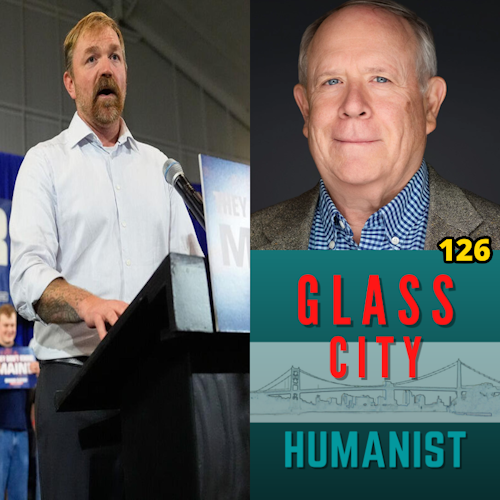
Episode 126: The Platner Test: Trauma vs. Accountability
In this episode, we focus on how we judge political candidates using evidence rather than instinct. We look at the Graham Platner controversy in Maine, and how prior trauma, PTSD, alcoholism, and harmful behavior can shape a person’s life while still not removing the need for accountability.
There are limits of certainty in politics. We say that we are not clairvoyant, that we should give people the benefit of the doubt until credible information changes our view, and that our own life experiences can affect how we interpret allegations. Recent political history and campaign reporting explains why corroborated evidence matters.
The other big story is local. We discuss Ohio House Bill 347 and the continuing effort by Christian nationalist groups to restrict abortion despite our state’s reproductive rights amendment. Following a public records requests, we show who was involved in shaping the bill, and how the documentation revealed coordination behind the proposal between a state anti-abortion lawyer and the two representatives that introduced his copy and pasted bill.





Extras:
Graham Platner is sharing more about post-combat struggles. Has it made his campaign more resilient?
Graham Platner Finally Drops Out Of Maine Senate Race
Chuck Schumer’s favorite Founding Fathers quote is completely made up
Ohio doctors push back against 24-hour abortion waiting period proposal (HB 347)
Ohio HB 347 (2026) Rep. Josh Williams PRR received June 1, 2026
Ohio HB 347 (2026) Rep. Mike Odioso PRR received July 8,2026
Transcript:
Click Here to Read Full Transcript
[0:05] This is Glass City Humanist, a show about humanism, humanist values, by a humanist. Here is your host, Douglas Berger. If we learn one thing from the Graham-Platner affair is that we aren’t clairvoyant and can only make decisions and judgments based on the evidence and information that we have. We also look at the roots of a proposed anti-abortion bill in Ohio. Those Christian nationalists just won’t quit. Glass City Humanist is an outreach project of the Secular Humanists of Western Lake Erie, building community through compassion and reason for a better tomorrow.
[1:00] Okay, what I wanted to talk to you about in this segment concerns the recent news that you might have seen about the, former nominee for Senate in Maine, Graham Platner. He was a former service member who became an oyster farmer in Maine and was running against Susan Collins and then had some really questionable, things come out in the New York Times. And then finally, Politico website had a thing about him raping a woman, which pretty much led to an entirely loss of support in the Democratic Party, which is a good thing.
[1:53] Because one of the reasons is that he kind of lied about the raping of the woman that came out because he told some, he did some press conferences or did some interviews where he said after the New York Times came out, New York Times article came out and said nothing else was going to come out and then something else did. So he ended up announcing his withdrawing as he should, you know, we should, you know, I believe the stories, I believe the, even the Republican woman that supported Kavanaugh, I believed her story, but I’m not going to talk about the political part of it, the political aspect, because I think that that’s important, but that’s kind of beyond the scope of this podcast where, you know, we’re trying to put our humanist values into action. And one of the things that concerned me about how this story played out was after the.
[2:52] Platner finally had to withdraw. And there were some people that, on the progressive side of things, that were very upset that other progressives supported him for so long and that as soon as there was red flags about him, they should have kicked him to the curb. I don’t agree with that. I really believe we should always give people the benefit of the doubt, just like we believe those women when they tell us that they’ve been attacked or assaulted or raped. We should believe people when they tell us that if they’re running for office that they didn’t know that their tattoo was a Nazi symbol.
[3:32] Or that they, in this case for Platner, he also had admitted that he had suffered from PTSD from his military service. And that possibly factored into his alcoholism or heavy drinking and his bad interactions with, a lot of women in his life over the period of time there before he cleaned up his act. And I really believe that people can change if they acted like total bad people. I believe if they work on it and get treatment and go through the steps and, all that stuff, you know, an alcoholic can become a productive citizen again. I believe somebody that robbed a bank and served their time in prison, as long as they go through all the steps, I believe they can be a productive a citizen, I don’t believe just chucking him to the curb. And I really, it disappointed me that some of the reaction, people just dismissed Platner’s trauma.
[4:40] Not trying to explain anything away or that we should have just not got him to quit, just the fact that they didn’t even acknowledge that possibly he had some prior issues that played into a lot of the stories that came out. And he still was damaged, a damaged candidate, and he needed to drop out. But I’m just saying that, you know, at least for me personally, I understand that. You know, I lived with somebody that had PTSD. So I try to be understandable about people that have experienced trauma in their life. And it does. It is not fun. It is not a fun time for those people. And so hopefully, you know, he seems like he got treatment and he got over all of that trauma and he did become a better person. His politics were progressive and everything. How we analyze information in
[5:40] order to make a decision. OK, so let’s say I’m a voter in Maine and I’m looking at the candidates that are running for Senate, U.S. Senate.
[5:53] And I know one of the candidates, the Republican candidate, and all the things that they do, I disagree with them. Then I see this Democratic candidate, and they have a lot of ideas, a lot of policy things that I like. So I’m going to support them.
[6:14] Now, I always think that I need to give people the benefit of the doubt, no matter what. Unless and until I get more information that would lead me to a different conclusion. And that’s exactly what happened, at least personally, for my support for Graham Platner that started as support and now I don’t support him. Is, you know, I acknowledged his PTSD. He made some mistakes. You know, we’re allowed to make mistakes, even though in the political realm, people tend to use those mistakes against you. And that’s exactly what happened to Platner. Now, some people have done these conspiracy theories that it was some kind of Jewish conspiracy to get him or something. No, it wasn’t a conspiracy. There was a lot of.
[7:15] Opposition research done on him, obviously. And I think what it was is that his opponents couldn’t defeat his politics. They didn’t have a better plan. They didn’t have better politics. So they just dug and dug and dug and dug until they found all the skeletons in his closet that he thought he had well hidden. And unfortunately, he did not have them hidden deep enough. Does that mean that he should never have been a candidate? No, not really. The worst that could happen is if it came out after, let’s say he got elected, and it came out, you know, years later that that lady that the Politico interviewed comes out and gets interviewed in, I don’t know, 2028.
[8:05] And there are calls for him to resign. And that would be the worst that could happen is that he’d end up having to resign. It’s happened before. People, I don’t know if people remember Al Franken, the comedian, was the senator from Minnesota, and a picture of him kissing a female soldier came out. And it did not look good for him because supposedly he did it without her permission, and consent and the democratic party may basically forced him to resign.
[8:45] And and when we’re talking about morals and morality you know we know it’s all situational, but you know there’s just you don’t treat other humans like crap you just don’t, but what what i want to point out, though, is that we cannot make decisions. We can’t read minds. We’re not clairvoyant. You know, and we also are all subject to our own experiences, our own life experiences. So, like I said, you know, I lived with somebody that had PTSD. So when Platner came out and said, well, that PTSD made him a heavy drinker and he treated women really badly. That made sense to me and he said he was getting help and that satisfied me and I continued to support it. Other people in the political spectrum thought just the fact that he was terrible to women was disqualifying because they had a different life experience. So you’re probably asking yourself, well, is there something that we can do, to make that where it’s not subjective like that? It’s like, no, we can’t. You know, we have political people that complain that people vote based on vibes. You know, like, I like that guy’s, I like the cut of his jib.
[10:11] Or people thought that Bill Clinton was sexy. So they voted for him because he was sexy. You know, and you get people like that. That happens. That happens. Or when people are talking about their life experience and they open themselves up to being examined when they’re running for a public office, like I said, I like to try to give them the benefit of the doubt. Whether they’re whatever party that they’re from, you know, we know certain, political people are just consummate liars and we can never believe anything that they tell us up front unless we can confirm it in other ways. But if you’re just regular Joe or regular Jane and you come out of the suburbs or, downtown and you say, I’m running for office and here’s my life story, I’m going to believe you until I get information that changes my view.
[11:14] And it’s not going to be just any information. It’s not going to be like the guy down at the corner saying, hey, did you hear about so-and-so? You know, it’s going to have to be credible information. It’s going to have to be from a news source that is trustworthy. They have done their due diligence. I know I go through when I’m watching campaign ads that come on that seem false. You know, I and sometimes they’ll do like, well, so and so voted against this and they’ll have the the bill number. Well, I’ll go back and look at the votes. And I also go look at the bill because sometimes the politician votes against the bill because it had something else in it that was bad. Even though what they’re being complained about, it was good or should have been passed by whoever is running against them. It could have been something else. You know, that happens too. So basically what I’m saying, the whole point that I’m trying to make, especially in light of this Graham Platner thing, is…
[12:23] You know, just it’s not it’s not a gut instinct for everybody. It shouldn’t be. That shouldn’t be a qualification for office, a gut instinct. You know, oh, I know this guy’s bad news, so I’m not voting for him. You’re free to make that decision, but that’s a poor decision. It should always be based on evidence. Clear, concise evidence that’s been corroborated in different areas. So it’s just not hearsay. And that is the best way to make your decisions when it comes to politics and candidates, because not every candidate is going to be sexy. You know, you’re not going to have and it could be somebody that that you don’t like to hear them talk, but their plans are so good that it would be a travesty if they didn’t get elected just because you didn’t like how they talked. That’s a poor reason to make a decision. It’s always should be based on evidence. And that’s how we work as humanists.
[13:38] For more information about the topics in this episode, including links used, please visit the episode page at glasscityhumanist.show.
[13:59] Hemet Mehta over at Friendly Atheist has an article, and I’ll throw the link up in the show notes, about a fake, not fake, false founder’s quote that Chuck Schumer, the Democrat, minority leader in the Senate, used in his July 4th message to his constituents.
[14:25] And so, basically, just to tell you that, probably one of the few times you’ll hear me say this is, you know, sometimes both sides can get history wrong. And the particular thing that he wrote, he wrote, Happy 250th America. The Founding Fathers called America God’s Noble Experiment. I believe in all three words to this day. We are one nation under God. We have clung to noble ideas for longer than any other nation, and we are an experiment always changing, trying to make ourselves better. God bless America, and I hope everyone has a wonderful day celebrating with their friends and family. Now, that’s a good message, relatively good message for most people because it’s not about him, and he’s not berating people for being dumb or stupid like, our current president does. But what is wrong about it is him claiming the Founding Fathers called America’s God’s noble experiment.
[15:31] No founding father did that. They did a search of everything that the founding father said in a database that they have at the National Archives, and no founding father said that at all. It was said in a book review. Somebody in the Bulwark found it in a book review in 1939. And my guess it was probably introduced probably this is probably something like something Paul Harvey would have done or might have ended up in Reader’s Digest or or something like that. Where it was, quote, attributed to the founders that they never said. But check that out because it’s very important when they say that certain people said certain things and maybe they didn’t. So Hemant has a good write-up about it, and you should check that out.
[16:36] I hope that those that live in the greater Toledo area and want to attend our events, our Sholee events, that you check out our calendar. It’s humanuswle.org slash events. That’s where we keep an updated… Event calendar. Obviously, it says events. I wanted to make people aware about some upcoming events that you might want to mark on your dance card. In August, August the 8th, we will be having a late summer bonfire at the Farnsworth Metro Park near Waterville, Ohio.
[17:20] And that starts at three o’clock, goes till nine o’clock. So obviously it starts during the day. So, you know, and we’ll have provide some like soda pop and water and and probably have some fixings for s’mores and things like that. So that’s going to be a good time. And then in September, on September the 13th, we are going to be visited by Fish Stark, who is the executive director of the AHA. He’s going to be stopping by and visiting with us. We’re going to have a little get together with him starting at two o’clock at the Jaeger Center at Swan Creek Metro Park. And he’s going to, I guess, say a few words and then we’ll do like question and answer. But it’s mainly like get to know him, meet and greet type thing.
[18:13] He is going to be doing some speaking over several days. He’s going to be visiting Columbus, Ohio, and then Detroit. And so on his way to Detroit, he’s going to stop by in Toledo. And I think the Unitarians, the First Unitarian Church is trying to arrange something as well. So look for that information to come out sooner than later. The other thing I wanted to let you know about, and usually I have an interview with somebody that puts this event together. And unfortunately, it slipped my mind and I didn’t schedule one. But we have the BajaCon 2026. Explore Secular Thought and Free Thought Community. And that is coming up August 21st through the 23rd. And that is going to be in Sarnia, Ontario, Canada. That’s about two or three hours away from Toledo. So if you’re in the greater Toledo area, southeastern Michigan, Detroit area, it’s very close to you.
[19:24] Um, this is a group that I’ve been highlighting on the podcast for several years for this event. They have a good, great lineup of speakers. Uh, they’re going to have Seth Andrews. They always have Seth Andrews. Seems like, uh, Eugenie Scott, um, Noah Lundgens, probably pronounced that wrong. And Dan Barker and Andrew Seidel. So among others. And they also have hotel accommodations available where they’re at the location that they have. And basically it’s just a speaker with some meals and then they have a boat trip. But usually that sells out pretty quick, but you might want to check that out. And you can check out information on that event at BahaCon.com. It’s B-A-H-A-C-O-N.com. And uh like i said that’s coming up august 21st through the 23rd of 2026 and they are going to have a uh stellar lineup as uh, the longtime host of that who recently passed away bob used to say a stellar lineup of speakers, It’s their fifth annual conference, and it’s just across.
[20:48] The river, the St. Clair River, from Port Huron, Michigan. Not that far away from Toledo, and people should be able to check that out. So that’s exactly what’s coming up soon. Again, you know, check out our event calendar here at Sholee if you’re interested in local events. And we recently transitioned to the Zephy platform for donations and memberships. So if you’d like to donate or join our group, rest assured that the donations are still tax exempt. And because we’re on the Zephy platform, 100% of your donation and membership, dues are given to the group. They don’t charge us any extra processing fees like some of the platforms we’ve used in the past.
[22:03] Earlier this year, here in Ohio, we still have Christian nationalists trying to impose their religious beliefs on everybody here in the state. And even though Ohio passed, Ohio voters passed a reproductive rights amendment to our Constitution, we still have Republicans still trying to impose their anti-abortion.
[22:29] Beliefs on citizens of Ohio through state law. And one of those attempts is House Bill 347. And House Bill 347, which was introduced by Representative Josh Williams, who is our best friend when it comes to Christian nationalist stuff, and Representative Odiso, I believe is how he pronounced it. It’s O-D-I-S-O, or S-O-D-I-O-S-O, or something like that, O-D-C-O.
[23:05] He’s from the Cincinnati area. And so they introduced this House Bill 347 back in. They introduced it in late 2025. And what this would do is it would impose a 24-hour waiting period for women that wanted to obtain an abortion. And so what you’re saying is, Doug, we have a reproductive rights amendment. And so any state law that prevents a woman from obtaining an abortion when she wants to is against the law. And that’s probably the case, but they’re still going through the motions because you can still pass a law even though you know it’s not going to be enforced. And a lot of times these Christian nationalists, they do this just so that they can generate PR for their cause, as it were.
[24:01] So basically what happened was this bill got run through the House. It got passed in April of this year. And it got some opposition. It got a little bit of proponent testimony. And basically they believe that women that are going to obtain abortions are being coerced. And that the informed consent, medical informed consent, isn’t being done. And so we need a state law to require it. And so what that would end up doing is it would require women to wait 24 hours before they can have the procedure. And why they think that that is legal, I don’t know. I think because they’re thinking since it’s supposedly for health and safety reasons, but that’s not the case. Anyway, so they had this, ramrodded this through the House, it got voted on, and at the time in April, well, it was late March, I think, when it was passed, in early April, I submitted a request, a public records request, from Representative Williams’ office and Representative Odysseus’ office.
[25:17] And I did that in late April. And at the beginning of June, June 1st, I got Representative Williams information back. And I just got Odysseus’ request back on July the 8th. And at the time, I’m recording this on July the 9th. So that was like yesterday. And the reason why I did a public records request is because I wanted to see.
[25:47] What kind of emails, what kind of communications was going on that was related to this, what was related to this bill. So basically what I did was I read through it. There wasn’t any like, there was a smoking gun, but I’ll get to that here in a minute. But in the packet I got back from Representative Williams’s office, it showed that he had reached out to the Catholic Conference, the Center for Christian Virtue, which is a advocacy group here in Ohio, Heartbeat International, and Ohio Right to Life, inviting them to offer proponent testimony or comments about the bill. Now, I think it’s highly ethically suspect when an elected official, a state representative or legislative person reaches out to a particular group, to submit testimony or comments about a bill. I tend to frown on that. I don’t agree with I know some people on the Democratic side, they also do it.
[27:00] I would much prefer that they just put out a news release saying, hey, you know, we’re looking for testimony, whatever. But so Williams did that. Heartbeat International was the only group that turned him down, point blank. And the Center for Christian Virtue had a staff meeting on the hearing date that was scheduled. And at the time, I haven’t seen any written testimony that they had left.
[27:29] In the Odioso packet, they had emails from where the Cincinnati Right to Life mentioned that they worked with a lawyer named Brian Hurley, who had represented women who had sued Planned Parenthood for abuse and cohesion. And I can never say that word, cohesion. And he was the one who wrote House Bill 347. So it wasn’t even the representatives that wrote the bill. It was somebody who had a particular agenda. And this guy, Brian Hurley, he is the one that wanted it because he’s a lawyer representing people who claim that they’ve been hurt, because of a lack of informed consent and that they’ve been coerced into having abortions, which isn’t a thing, but that’s what these anti-abortionist people do. It was also interesting to note that in the Odysseo file that before there was a hearing in February of this year, 2026, And the pro side, they couldn’t get a single medical doctor to offer supporting testimony, even though Cincinnati Right to Life offered to pay their expenses to show up in person.
[28:52] So they had one or two doctors that would submit written testimony, but they couldn’t find a single doctor who would come to Columbus to testify for this bill. They eventually did find a couple doctors, but the fact that at one point they couldn’t find anybody should tell you something.
[29:12] And so I’ll have a link in the show notes for these public records that, you know, people are interested in checking them out to see how the anti-abortion side works. And that’s how they work. You know, it’s one thing to have a meeting with a legislature and say, you know what, Bob, we could really use a bill that banned, this or banned such and such. And then, and then legislator Bob, he goes to a staff and he said, Hey, how about if we do this bill? And then they write the bill up and go through the motions. That’s totally different than somebody showing up at legislator Bob’s office and said, here, I wrote this bill, pass it. And then they, then they give it to their staff and they say, Hey, we need to pass this. And so basically what it is, is this is Brian Hurley for many years, according to the Cincinnati Right to Life, for many years has been trying to, get such a law passed, a 24-hour waiting period. And they had it originally before the…
[30:23] Reproductive rights amendment was passed, and a lot of those regulations were, ruled unconstitutional after that came into force. So they want to try again. And basically, I can tell you, it most likely is not going to pass muster, because it involves the state and a woman’s right to reproductive choice for no other reason than what they claim is, health and safety reasons. And that’s the excuse that they used constantly when they were doing those TARP regulations, those targeted regulations to try to end abortion before Roe v. Wade was overturned. So that’s what’s going on in Ohio. And so that’s what I always tell people, you know, if you’re interested in finding out how the sausage is made is submit a public records request to your legislator, for whatever, you know, whatever issue that you want to check. And you’ll, sometimes you’ll be surprised about what you find out. And, and I was, I was kind of surprised how obvious it was, even though I assumed it was obvious, but now I have the proof.
[31:50] For more information about the topics in this episode, including links used, please visit the episode page at glasscityhumanist.show.
[32:15] Glass City Humanist is hosted, written, and produced by Douglas Berger, and he’s solely responsible for the content.
Transcript is machine generated, lightly edited, and approximate to what was recorded. If you would like perfect transcripts, please donate to the show.
Credits
Written, produced, and edited by Douglas Berger and he is entirely responsible for the content. Incidental voice overs by Sasha C.
The GCH theme is “Glass City Jam” composed using Ampify Studio
This episode by Glass City Humanist is licensed under CC BY-NC-ND 4.0.

